Dorsal Root Ganglion (DRG) Stimulation
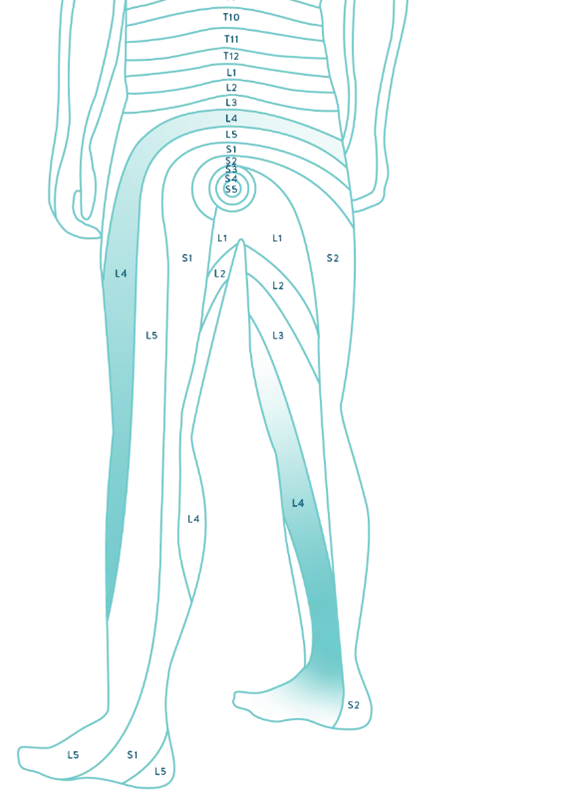
Dorsal Root Ganglion therapy is a form of Neuromodulation and is designed to help patients manage chronic nerve pain. The Dorsal Root Ganglion is a cluster of nerve cells along the spine and are responsible for more difficult areas to treat chronic pain. Localized areas that this therapy treats include pelvis, groin, hip, knee, ankle and foot.
DRG therapy works by sending mild electrical pulses to the nerves responsible for the painful sensations. Outcomes for the patient could include a reduction or a complete block in the pain from the affected nerve to the brain.
Who Benefits from DRG
DRG stimulation may be recommended if you have chronic, localized nerve pain lasting six months or more that has not responded to conservative treatments such as medications, physical therapy, or injections.
Common conditions include:
- Complex Regional Pain Syndrome (CRPS)
- Nerve pain following surgery or trauma (post-surgical or post-traumatic neuropathic pain)
- Chronic pain in areas that are hard to treat with standard spinal cord stimulation, such as the foot, knee, groin, or pelvis
You may be a candidate if:
- Diagnostic nerve blocks or prior treatments have confirmed the pain’s nerve-related source.
- You are seeking to reduce or eliminate reliance on long-term pain medications.
What to Expect
Step 1: Trial Phase
The purpose of the trial is to test whether DRG stimulation provides meaningful pain relief. The process includes:
-
- Thin leads (wires) are placed through the skin near the DRG under X-ray guidance.
- The leads connect to an external stimulator worn on a belt.
- The trial typically lasts 5–7 days.
At least 50% pain relief is considered a successful trial with improved function.
Step 2: Permanent Implant
If the trial is successful, a small battery-powered pulse generator is implanted under the skin, usually in the lower back or buttock, with the leads placed at the DRG. The procedure is done under local anesthesia with sedation or general anesthesia and typically takes 1–2 hours.
After the Procedure
- Incision Care: Small dressings will cover the incisions. Stitches or surgical glue are used.
- Pain/Discomfort: Mild sorenes or swelling at the incision or lead sites is common for several days.
- Programming: Your doctor or device representative will consumize the electrical settings to provide optimal pain relief.
Recovery and Aftercare
- Activity Restrictions:
- Limit bending, twisting, or heavy lifting for about 4–6 weeks to allow the leads to stabilize.
- Gentle walking is encouraged.
- Follow-Up Visits:
- Several programming sessions may be needed to fine-tune stimulation levels.
- Regular check-ins ensure the device is functioning well.
- Long-Term Management:
- The generator battery life varies (typically 5–10 years) and may require replacement when depleted.
- The system can be adjusted or turned off at any time.
Risks and Considerations
While generally safe and reversible, potential risks include:
- Infection at the implant site
- Lead movement or breakage
- Temporary numbness or tingling
- Need for reprogramming or hardware revision
Living with pain doesn’t have to sidetrack your life. Call us today for a consultation.
Learn more about our DRG Medical Device Partner: https://aboutyourpain.com/
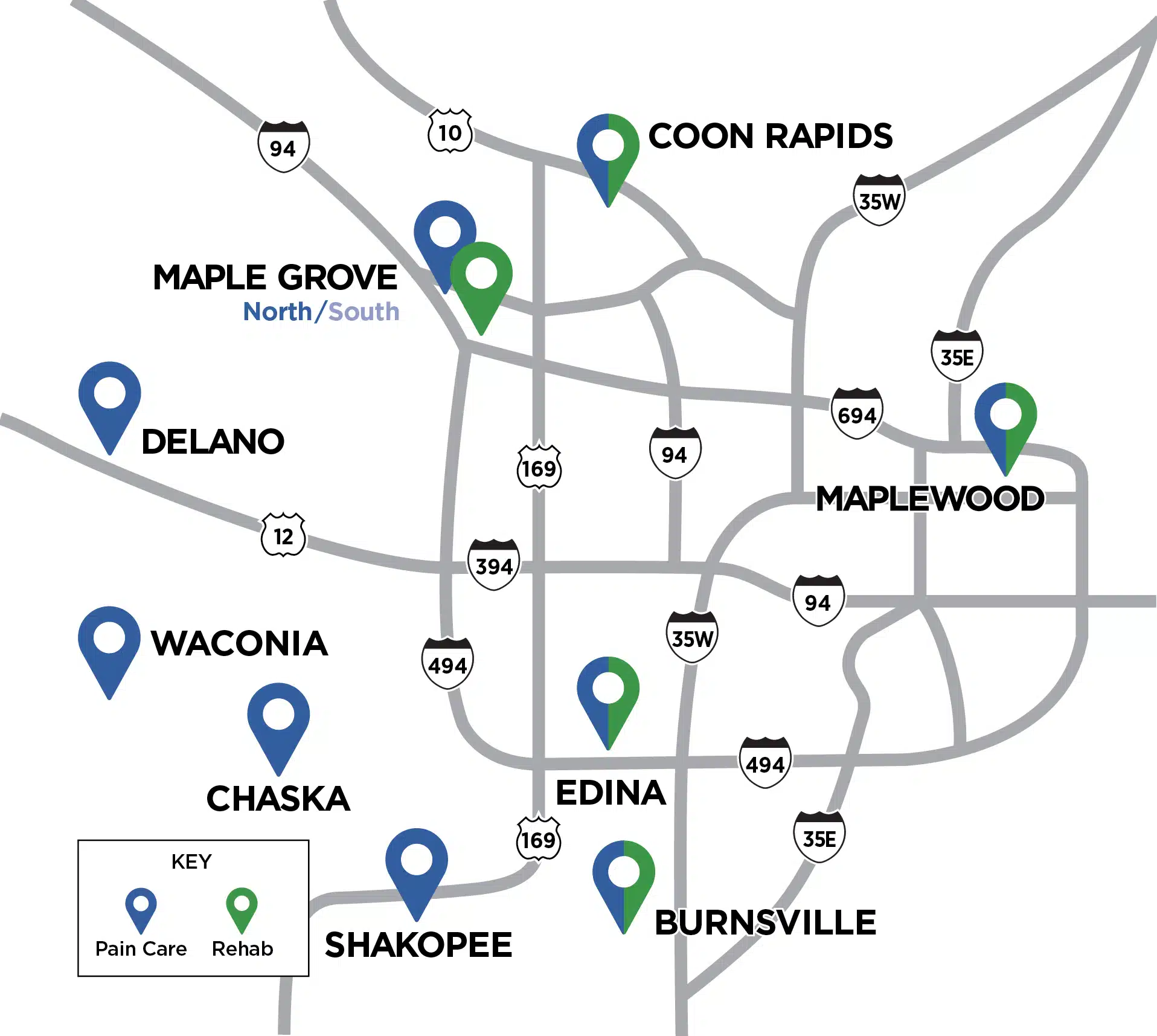
Explore the Twin Cities Metro Clinics where we offer Pain Care evaluation & treatment: